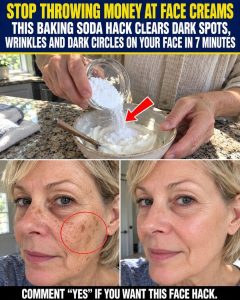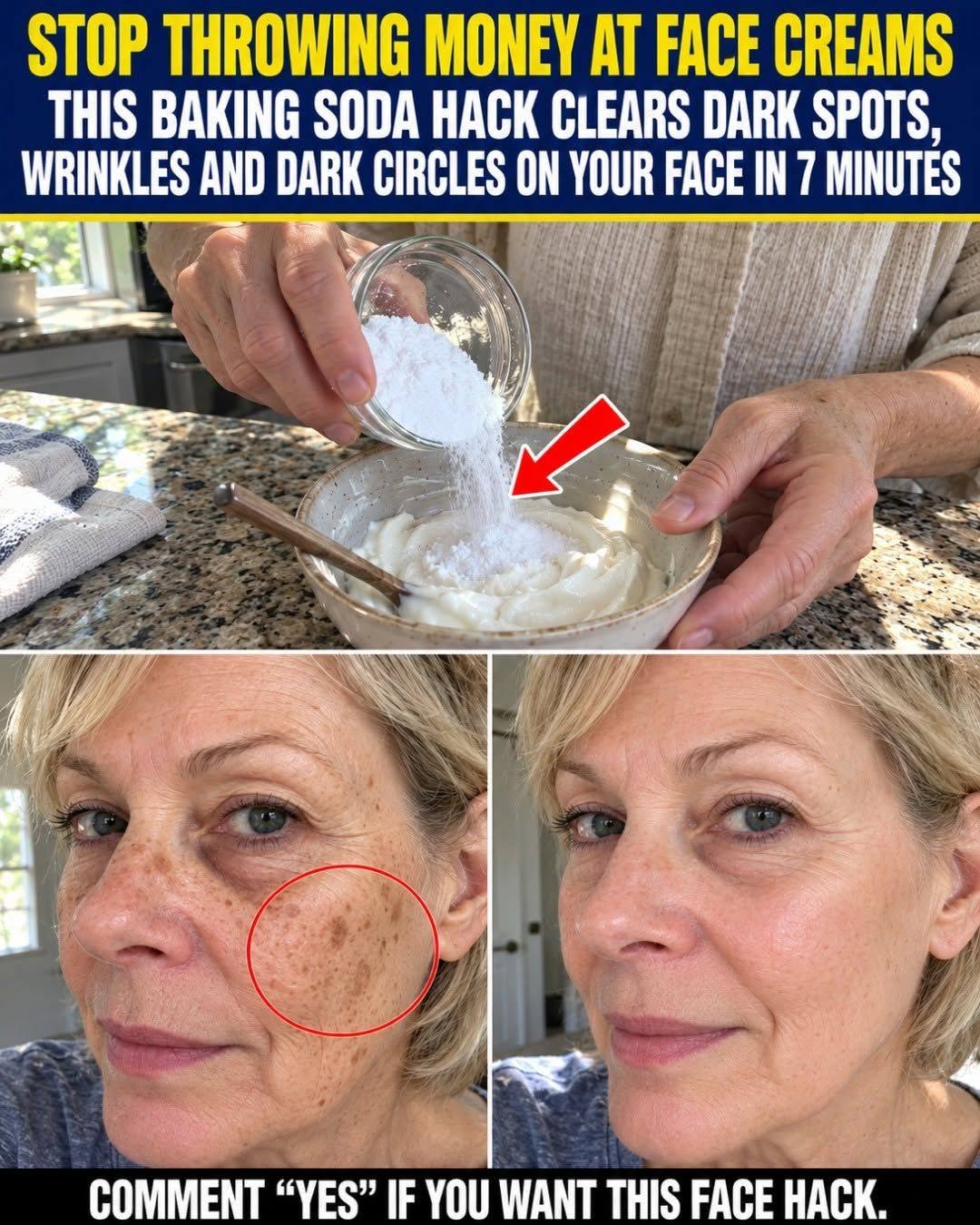
Baking soda is a common household ingredient, but that does not make it a safe or effective facial treatment. Claims that a baking-soda mask can erase dark spots, wrinkles, and under-eye circles in seven minutes are not supported by good evidence.
In fact, applying baking soda directly to the face can irritate the skin because its pH is much higher than the skin’s natural mildly acidic environment.
If your goal is brighter, smoother-looking skin, a gentle skincare routine is a safer approach.
A Simple 7-Minute Skincare Routine
What You Need
- Gentle fragrance-free cleanser
- Fragrance-free moisturizer
- Broad-spectrum SPF 30 or higher
- Optional: a product containing niacinamide or azelaic acid for uneven pigmentation
Step 1: Cleanse Gently
Wash your face with lukewarm water and a mild cleanser.
Use your fingertips rather than a rough cloth or scrub.
Step 2: Rinse Thoroughly
Remove all cleanser and gently pat your face dry.
Don’t rub the skin, particularly around the eyes.
Step 3: Apply a Moisturizer
Apply a thin layer of moisturizer while the skin is still slightly hydrated.
Ingredients such as glycerin, ceramides, and hyaluronic acid can help support the skin barrier and reduce the appearance of dryness.
Step 4: Address Dark Spots Carefully
For persistent uneven pigmentation, a properly formulated skincare product containing niacinamide or azelaic acidmay be more appropriate than a kitchen ingredient.
Introduce one active ingredient at a time and stop if significant irritation develops.
Step 5: Protect Your Skin From the Sun
Apply broad-spectrum SPF 30 or higher during the day.
Sun exposure can worsen pigmentation and contributes to premature skin aging, so sunscreen is one of the most important steps when trying to improve the appearance of dark spots.
Why Baking Soda Isn’t a Good Choice
Baking soda is alkaline, while healthy facial skin has a naturally acidic surface.
Applying baking soda directly to the skin can cause:
- Dryness
- Burning or stinging
- Redness
- Irritation
- Disruption of the skin barrier
Scrubbing it into the skin can make irritation even worse.
And although the skin might temporarily look different after washing off a mask, that is not the same as removing pigmentation or reversing wrinkles.
What About Under-Eye Circles?
Under-eye darkness can have many causes, including genetics, skin pigmentation, visible blood vessels, shadows caused by facial anatomy, allergies, and lack of sleep.
Baking soda cannot reliably eliminate these causes.
The skin around the eyes is also particularly delicate, so household powders and DIY acids or alkaline ingredients should not be used there.
What About Wrinkles?
Moisturizing can temporarily make fine lines look less noticeable by improving skin hydration.
For longer-term wrinkle care, sunscreen and evidence-based ingredients such as retinoids can be considerably more useful than a baking-soda mask.
When to Have a Dark Spot Checked
Not every dark spot is simply an age spot. If a spot is new, changing in size or color, bleeding, crusting, itching persistently, or looks noticeably different from your other spots, have it examined by a dermatologist rather than trying to remove it at home.
Final Thoughts
Baking soda may be useful in the kitchen, but it is not a proven seven-minute treatment for dark spots, wrinkles, or under-eye circles. Using it on the face can actually irritate the skin and make the skin barrier less healthy.
For brighter and healthier-looking skin, stick with gentle cleansing, consistent moisturizing, sun protection, and properly formulated skincare products.