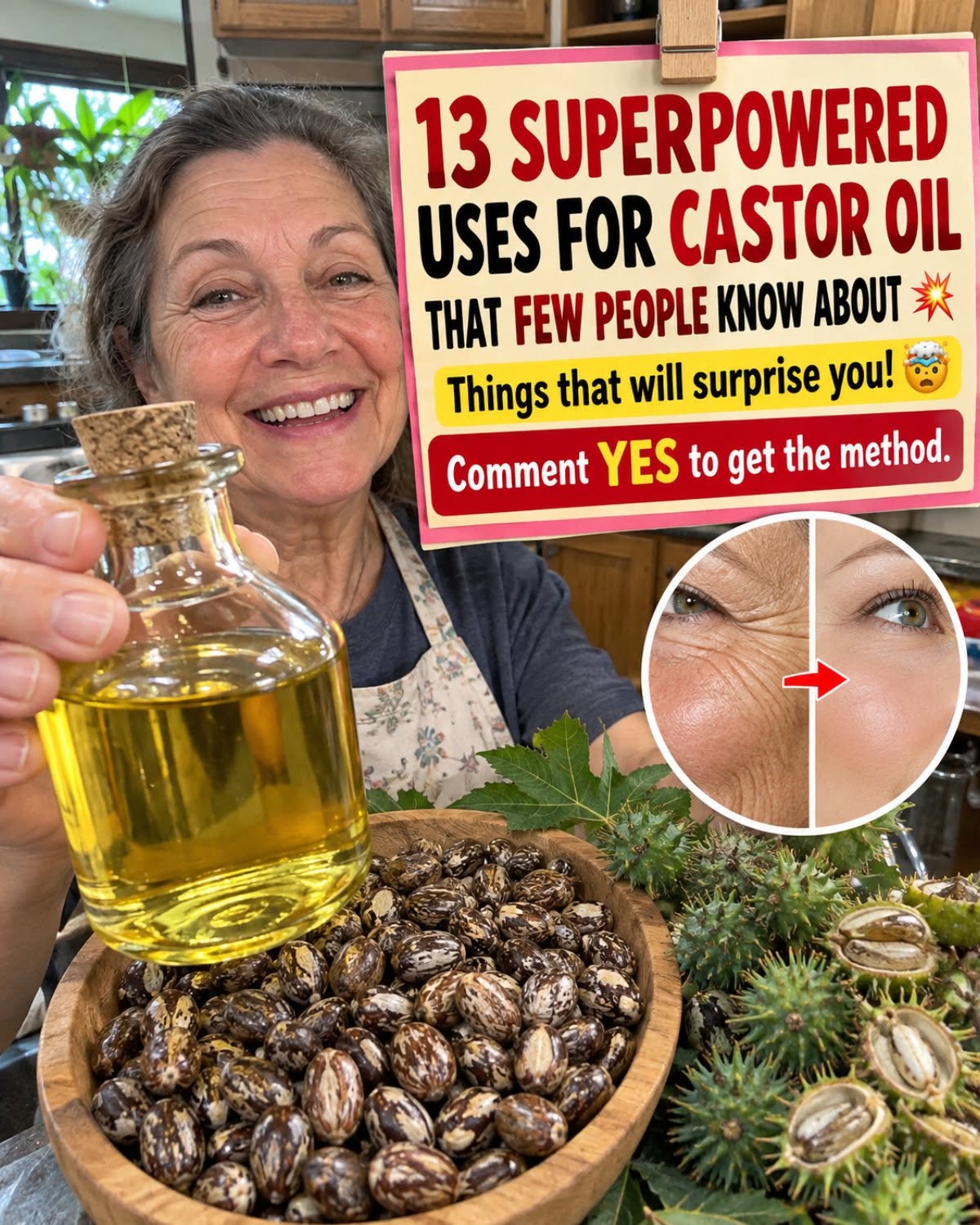
Castor oil has been hiding in plain sight.
That thick, gold oil in the bottle is not just an old-fashioned laxative. It hits the skin, joints, scalp, belly, nails, and even the nights when your bladder keeps dragging you out of bed.
The reason is blunt: castor oil is packed with ricinoleic acid, a rare fatty acid that pushes deep into tissue, stirs circulation, and forces a sluggish system to start moving again. The modern wellness world loves expensive capsules and polished labels, but this is the kind of raw biological fuel that has been sitting in the produce aisle’s shadow for decades.
Your body knows the difference. When tissue is dry, cramped, inflamed, or starved of support, it starts acting like a house with the pipes half clogged and the lights flickering in different rooms.

That is why people notice castor oil first in the places that feel most neglected: the face that looks tired, the knees that creak, the scalp that itches, the belly that feels bloated, the feet that crack, the bladder that won’t stay quiet.
And that’s the part the $100-billion wellness machine barely whispers about: the cheapest fix is usually the one with the least airtime.
The Cellular Flush your tissues have been begging for
Castor oil works like a deep clean on a neglected machine. Think of your body’s outer layers and connective tissue like a workshop floor coated in sticky dust, old grease, and dried residue; once the right oil gets in, parts stop grinding against each other and start gliding again.

That is what ricinoleic acid does. It forces a shift in the local environment, softening rigid tissue, calming hot spots, and waking up circulation where everything has gone stale.
On the skin, that means dry patches stop looking parched and angry. Around scars and stretch marks, it begins loosening the hard, rope-like texture that makes those areas feel welded in place.
Run it over a stubborn scar and you are not just “moisturizing.” You are feeding a hardened band of tissue with a slippery, tissue-penetrating oil that helps it stop behaving like old boot leather.

That same pressure-release effect is why people use it on rough heels and cracked hands. The first thing they notice is not glamour — it is relief. Skin that used to snag on socks starts feeling less like sandpaper and more like something alive again.
Why the joints feel the shift first
When knees, fingers, or wrists feel swollen and stiff, the problem is not just age. It is inflammation pressing down like a heavy hand on a door hinge that should swing freely.
Castor oil steps into that joint space and starts quieting the chemical noise. It hits the area like a fire-smothering layer poured over embers that keep relighting every time you move.

Picture a morning where your hands do not lock into claws for the first ten minutes. You reach for a mug, twist the lid, and your fingers cooperate instead of complaining with every tiny motion.
That is the payoff people chase when they warm castor oil and use it as a wrap. The tissue around the joint feels less trapped, and the whole area stops broadcasting that hot, irritated ache.
The ugly contrast is brutal: without that support, the joint stays stiff, the swelling lingers, and every step sounds louder inside your own body than it should.
Why nobody told you? Because Wall Street doesn’t build empires around a bottle of oil that doesn’t need a logo the size of a billboard.
The scalp, lashes, and brows are starving too
Hair follicles are tiny factories, and when they get sluggish, the output shows up in thin brows, brittle lashes, and a scalp that sheds too easily. Castor oil floods those follicles with a dense coating that helps them hold on and stay anchored.
It works like feeding a dry garden after weeks of heat. The soil does not become a rainforest overnight, but the roots stop gasping and the whole patch starts looking less abandoned.
People notice this in the mirror first. Brows look fuller at the edges, lashes seem less fragile, and the scalp stops feeling like a scratched-up desert floor.
For the person who has been watching strands collect in the shower drain, that matters. It is not vanity — it is the shock of seeing a body part stop acting like it is falling apart.
And when the scalp is coated with buildup and flakes, castor oil can loosen the crusted residue that keeps pores sealed shut. That opens the door for a cleaner surface and a calmer scalp environment.
The belly and bladder respond in a different way
Castor oil is also used where tension hides below the beltline. A warm application over the abdomen can help the whole lower system unclench, especially when bloating, cramping, or restless nights keep showing up like unwanted houseguests.
Think of the lower abdomen like a crowded train station at rush hour. When the signal system gets jammed, everything backs up — pressure builds, movement gets awkward, and your body acts like it forgot how to settle down.
That is why some people feel a strange wave of release after using it in this area. The body stops bracing, the gut feels less inflated, and the night feels less fractured by constant bathroom trips.
The bladder side of this is especially annoying. You finally lie down, and then your system starts tapping your shoulder again and again, demanding another trip to the toilet.
When the lower nerves and tissues calm down, sleep stops getting chopped into pieces. The bed feels like a place to rest again instead of a launchpad to the bathroom.
The ugliest truth in health: the cheapest fix gets the least airtime.
The feet, nails, and dry skin get their own rescue
Rough heels and brittle nails are not small problems when they make every step or every glance at your hands feel depressing. Castor oil moves into those hard surfaces and starts breaking up the stiffness that makes them look and feel neglected.
It is like oiling the hinges on an old gate that has been shrieking for years. Once the friction drops, the whole thing moves with less resistance and less noise.
That is why people use it on cracked heels, thickened nails, and dry patches that refuse to soften. The surface stops looking like it was baked in place.
Even irritated skin after sun exposure or insect bites can feel less hostile when it is coated with a protective lipid layer. The burn and itch stop screaming quite so loudly, and the skin gets a chance to settle.
Over time, the pattern gets clearer: the body is not “broken.” It is starved of the kind of deep, tissue-level support that plain old oil can deliver when everything else has been overcomplicated.
One thing can wreck the whole effect
Most people drown the area in oil and expect magic. That backfires because too much product turns into a greasy film that sits on top instead of working into the tissue where the real shift happens.
The better move is simple: warm it, apply it with purpose, and pair it with heat or a clean wrap so the oil is pulled inward instead of wiped away by friction and impatience.
That small detail changes everything. Alone, castor oil is powerful; paired with warmth, it becomes a different animal entirely.
And the next layer matters too: the right companion ingredient can decide whether the effect stays surface-level or sinks deep enough to make your body notice.
This article is for informational purposes only and does not replace professional medical advice. Please consult your healthcare provider for personalized guidance.