
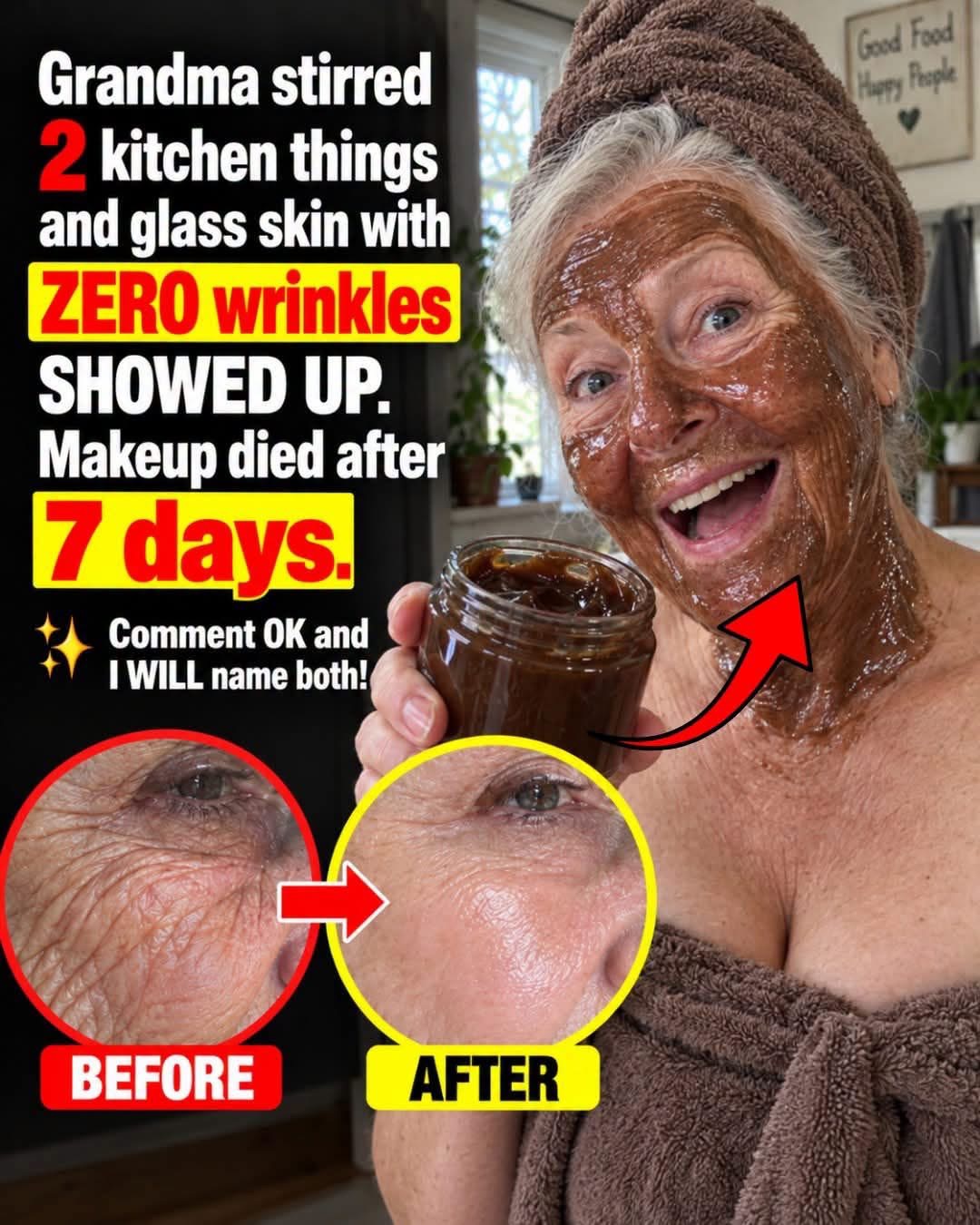
Why the skin looks dull, lined, and thirsty
Dead skin stacks up like dust on a window. Once that layer thickens, light stops bouncing cleanly off the face, and suddenly the skin looks flat, rough, and older than it is.
Coffee acts like a manual sweep. Those coarse particles loosen the crust on top, and the rubbing motion stirs the skin’s surface the way a broom stirs dust off a floorboard before it gets packed in deeper.

Now picture a woman in the bathroom under harsh light, tilting her chin up and seeing fine lines etched across her cheeks and forehead. She smooths on foundation, and instead of hiding the damage, the makeup catches in every crease like chalk in a dry sidewalk crack.
That’s the ugly contrast: when the top layer is clogged and lifeless, even expensive creams sit on top like paint on a dirty wall.
The Cellular Polish is what this mask really creates — a quick reset that strips away the dull outer film so fresher skin can show through.

The milk side of the equation
Milk brings in the softening force. Its natural fats and proteins coat the skin so it doesn’t feel stripped raw after exfoliation, and that matters because over-scrubbed skin turns tight, angry, and visibly lined.
Think of it like waxing a dry wooden table versus rubbing oil into it first. One leaves the surface brittle and noisy; the other makes it look deeper, richer, and less cracked under the light.
The first thing people notice is that the face stops looking so thirsty. The cheeks catch light differently, the skin feels less papery, and the whole surface looks like it has been ironed flat without losing its natural shape.

That’s why the before-and-after photos hit so hard. The “after” face doesn’t just look cleaner — it looks fed.
And yes, that is exactly the kind of shift the beauty market loves to package into a $79 jar and a glossy ad campaign.
Why women notice it in a different way
Women usually spot the change around the eyes, mouth, and cheeks first. Those are the places where dehydration and rough texture turn into visible age signals fast, like tiny fault lines spreading across a dry lakebed.
Once the top layer is cleared, those lines stop shouting. Makeup sits more evenly, blush blends instead of clinging, and the face looks rested even before any concealer shows up.
Picture getting dressed in the morning and not fighting your foundation brush. The skin doesn’t snag it, the powder doesn’t cake, and you don’t spend ten minutes trying to erase the look of fatigue from last night’s sleep.
That is why the “glass skin” effect sells. Not because the face becomes another person, but because the skin starts reflecting light instead of swallowing it.
And that’s why nobody built a Super Bowl ad around a coffee jar and a splash of milk.
The hidden mechanism nobody explains
This is not just a face mask. It is a rough little two-part system that attacks the two biggest reasons skin looks old: buildup and dehydration.
When buildup stays on the surface, pores look louder, texture looks deeper, and every wrinkle gets a shadow under it. When moisture is missing, the skin shrinks inward like a dried plum, and the lines become impossible to ignore.
The combination changes the whole picture. Coffee clears the debris. Milk lays down a soft film that keeps the skin from looking raw and overworked.
Think of a fogged bathroom mirror. If you wipe it with a dry towel, you smear the mess around. If you clear the film and then polish it, the reflection sharpens fast. That is the visual difference this kind of mask can create on tired skin.
Over time, the pattern gets clearer: the face looks less rough, less flat, and less dependent on makeup to appear alive.
The second place you feel it
The neck and jawline often give the game away. That skin is thinner, more fragile, and more likely to show every patch of dryness like cracked paint on an old door.
When the mask is used carefully, those areas can look smoother and more even because the surface grime is lifted and the skin is left with a softer finish. It’s the difference between a dry sponge and one that has been lightly refreshed with water.
Now the mirror catches a softer edge along the jaw. The face looks cleaner, the neck looks less crepey, and the whole lower half of the face feels more polished without a heavy cosmetic mask on top.
That is the kind of change people notice before they can explain it.
Why the system keeps this kind of fix quiet
The supplement and beauty machine loves complicated routines, stacked serums, and branded steps with names nobody can pronounce. A kitchen mix made from two ordinary ingredients has no logo, no subscription, and no profit engine behind it.
That’s the bitter joke. The cheapest fix gets the least airtime, even when it is sitting right there in plain sight.
So the woman who uses this mask doesn’t just see smoother skin. She sees less dependence on makeup, less panic before leaving the house, and less staring at every new line under bright bathroom lights.
That feeling is bigger than vanity. It is control returning to the mirror.
The one thing that can wreck the result
Rubbing too hard turns this from a skin-polishing treatment into a sandpaper attack. Pressing aggressively or leaving the mixture on irritated skin can strip the surface and leave it red, tight, and more obvious than before.
The smarter move is to keep the touch light, let the texture do the work, and rinse before the skin starts feeling overworked. One rough hand can undo the whole effect in a single pass.
There’s also a smarter pairing that changes everything, and it’s the next piece most people never hear about: the one ingredient that decides whether the skin looks merely clean or visibly lit from within.
This article is for informational purposes only and does not replace professional medical advice. Please consult your healthcare provider for personalized guidance.