
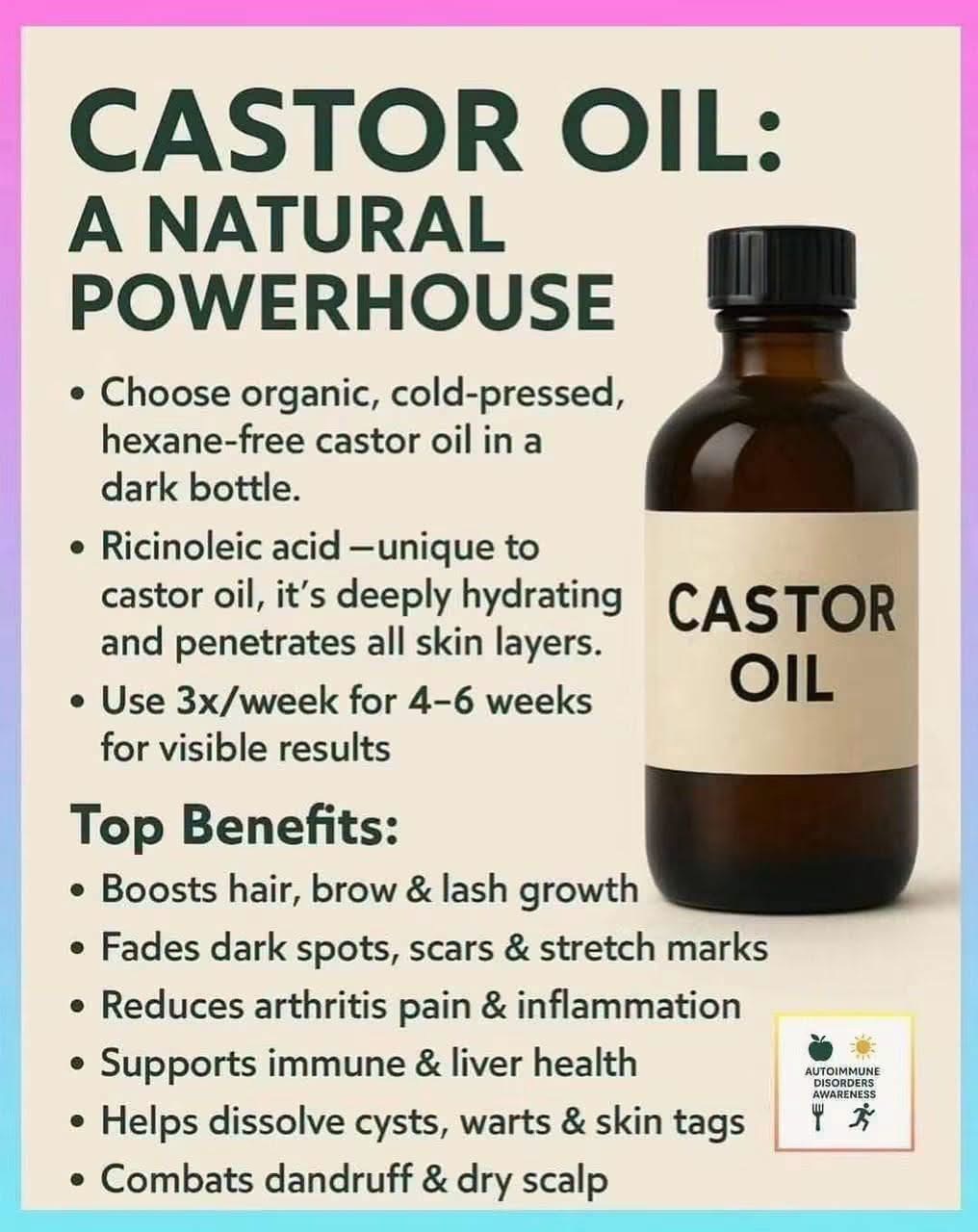
Castor oil is a nutrient-dense natural remedy powered by Ricinoleic Acid—a unique fatty acid known for its deep moisturizing properties and ability to penetrate deep into skin layers.
Explore Gourmet Recipes
🌿 How to Choose the Right Oil
To get maximum benefits, always look for castor oil with the following qualities:
- Organic
- Cold-pressed
- Hexane-free
- Packaged in a dark glass bottle (to protect it from light degradation)
💧 Basic Usage & Consistency
- Frequency: Apply 3x per week for 4–6 weeks continuously to see visible results.
✨ Top Benefits & DIY Recipes
1. Hair, LASH & BROW GROWTH BOOSTER
- How to use: Apply 1–2 drops to clean fingertips or a clean spoolie brush. Gently sweep over your eyebrows and lashes, or massage into the hairline before bed.
2. SCALP TREATMENT FOR DANDRUFF & DRYNESS
- How to use: Warm a small amount of oil between your hands and massage directly into the scalp. Leave it on for 30–60 minutes, then wash thoroughly with shampoo.
3. DARK SPOT, SCAR & STRETCH MARK SERUM
- How to use: Apply a few drops to targeted areas on your body or face. Massage in circular motions until absorbed to help fade hyperpigmentation over time.
4. SOOTHING COMPRESS FOR ARTHRITIS & PAIN
- How to use: Soak a small piece of flannel or cotton cloth in castor oil. Place it over sore joints, cover with a warm compress or heating pad, and rest for 30 minutes to reduce inflammation.
5. SKIN TAG & WART REMEDY
- How to use: Apply a tiny dab of pure castor oil directly onto skin tags, warts, or rough patches twice daily using a cotton swab.
6. EXTERNAL SUPPORT FOR IMMUNE & LIVER HEALTH
- How to use: Apply a castor oil pack over the upper right side of your abdomen (liver area) with gentle heat to promote relaxation and boost circulation.
💡 Pro-Tip: Because castor oil has a very thick consistency, you can blend it with a lighter carrier oil (like jojoba, sweet almond, or coconut oil) for easier application on your hair and skin. Always perform a patch test on a small skin area first!