
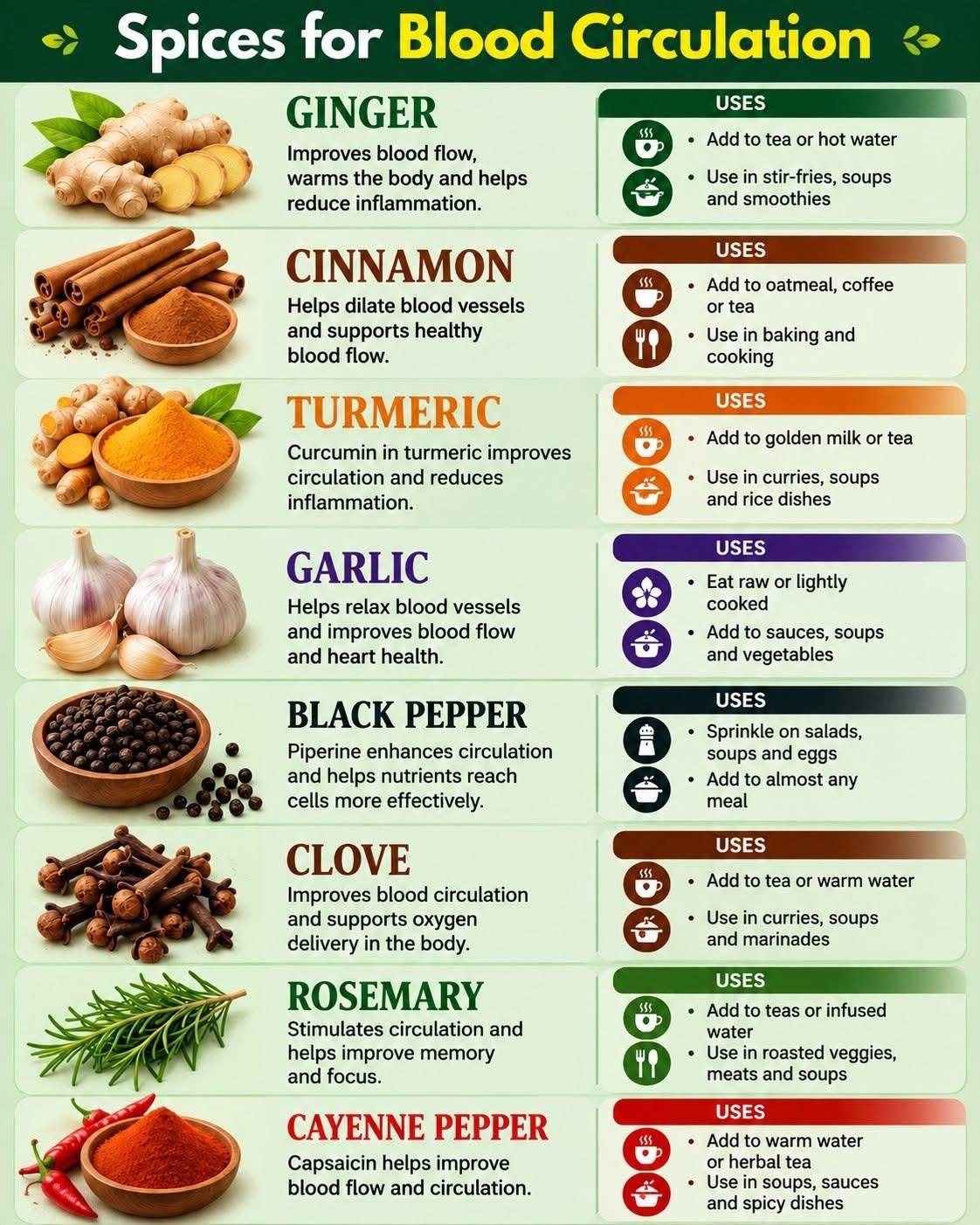
🌿 8 Spices That May Support Healthy Blood Circulation
Good circulation is important because blood carries oxygen and nutrients throughout the body. A healthy diet, regular physical activity, adequate hydration, healthy blood pressure and avoiding smoking are much more important for circulation than any single spice.
Still, several common herbs and spices contain compounds that have been studied for their potential effects on blood vessels, inflammation and cardiovascular health.
🫚 1. Ginger
Ginger contains bioactive compounds such as gingerols and has been studied for several health effects. Research in humans has particularly focused on nausea, menstrual discomfort and some symptoms of osteoarthritis. Its effects specifically on overall blood circulation are less firmly established than the image suggests.
How to use it:
- Add fresh ginger to tea or warm water.
- Use it in soups and stir-fries.
- Add a small amount to smoothies.
Tip: Large amounts may cause heartburn, stomach discomfort or diarrhea in some people.
⸻
🍂 2. Cinnamon
Cinnamon contains compounds such as cinnamaldehyde and has been investigated for metabolic and cardiovascular-related effects. However, current evidence does not clearly establish cinnamon as a treatment for a circulation problem.
How to use it:
- Add it to oatmeal.
- Sprinkle it over fruit or yogurt.
- Add it to tea or coffee.
- Use it in cooking and baking.
Important: Cassia cinnamon contains more coumarin, which can be problematic in large or prolonged amounts, particularly for people with liver disease.
⸻
🟠 3. Turmeric
Turmeric contains curcumin, a compound widely studied for its antioxidant and anti-inflammatory properties. Research has found some promising results for conditions such as osteoarthritis, but there isn’t enough evidence to conclude that turmeric directly improves general blood circulation.
How to use it:
- Add turmeric to soups and curries.
- Mix it into rice and vegetables.
- Add a small amount to warm milk or tea.
Black pepper can increase the absorption of curcumin, which is why the two are often combined.
⸻
🧄 4. Garlic
Garlic is one of the more extensively studied foods on this list. Research suggests that garlic supplements may modestly reduce blood pressure in people with hypertension and may slightly reduce total and LDL cholesterol. These effects are different from proving that garlic directly “improves circulation,” but they may be relevant to cardiovascular health.
How to use it:
- Add fresh garlic to vegetables.
- Use it in soups and sauces.
- Add it to salads, meat and fish dishes.
Important: Garlic supplements can increase bleeding risk, especially with anticoagulants or aspirin.
⸻
⚫ 5. Black Pepper
Black pepper contains piperine, which has been studied for its effects on the absorption and metabolism of certain substances.
One particularly interesting property is that piperine can increase the bioavailability of curcumin, which explains why black pepper is frequently combined with turmeric.
How to use it:
- Sprinkle freshly ground black pepper over vegetables.
- Add it to soups and salads.
- Combine it with turmeric when cooking.
Important: Piperine can affect drug absorption and metabolism, so people taking regular medication should be cautious with concentrated piperine supplements.
⸻
🌸 6. Clove
Cloves contain eugenol, an aromatic compound that has been studied for antioxidant and other biological effects. Cloves are commonly used in cooking and traditional preparations, but strong clinical evidence that eating cloves significantly improves whole-body circulation is limited.
How to use it:
- Add a small amount to tea.
- Use cloves in soups and marinades.
- Add them to certain rice and meat dishes.
For everyday use, culinary amounts are generally preferable to concentrated clove oils or high-dose supplements.
⸻
🌿 7. Rosemary
Rosemary contains several plant compounds, including rosmarinic acid, and has been investigated for possible effects on cognition and other functions.
Small human studies have reported potential effects on memory or cognitive performance after rosemary consumption, but these findings don’t establish rosemary as a treatment for poor circulation.
How to use it:
- Add fresh rosemary to roasted vegetables.
- Use it with chicken, fish or meat.
- Add it to soups.
- Use it to prepare an herbal infusion.
⸻
🌶️ 8. Cayenne Pepper
Cayenne pepper contains capsaicin, the compound responsible for its characteristic heat. Human studies have shown that capsaicin can increase blood flow in the skin when applied topically. This is different from proving that eating cayenne improves circulation throughout the body.
How to use it:
- Add a small amount to soups.
- Mix it into sauces.
- Use it in spicy vegetable or meat dishes.
- Add a pinch to herbal tea if tolerated.
Tip: Start with a small quantity because cayenne can cause burning or stomach irritation in sensitive people.
⸻
❤️ The Bottom Line
These spices can be excellent additions to a varied, nutritious diet. Ginger, turmeric, garlic, cinnamon, black pepper, cloves, rosemary and cayenne pepper contain interesting plant compounds that researchers continue to study.
However, they should be viewed as foods and spices that may support general health—not as replacements for treatment of high blood pressure, high cholesterol, circulation disorders or heart disease.
For better circulation, the fundamentals matter most: regular physical activity, a balanced diet, maintaining a healthy weight, controlling blood pressure and cholesterol, and avoiding tobacco.
If you have poor circulation, persistent cold/numb extremities, leg pain when walking, swelling, chest pain or shortness of breath, it’s important to seek medical evaluation rather than relying on spices alone.