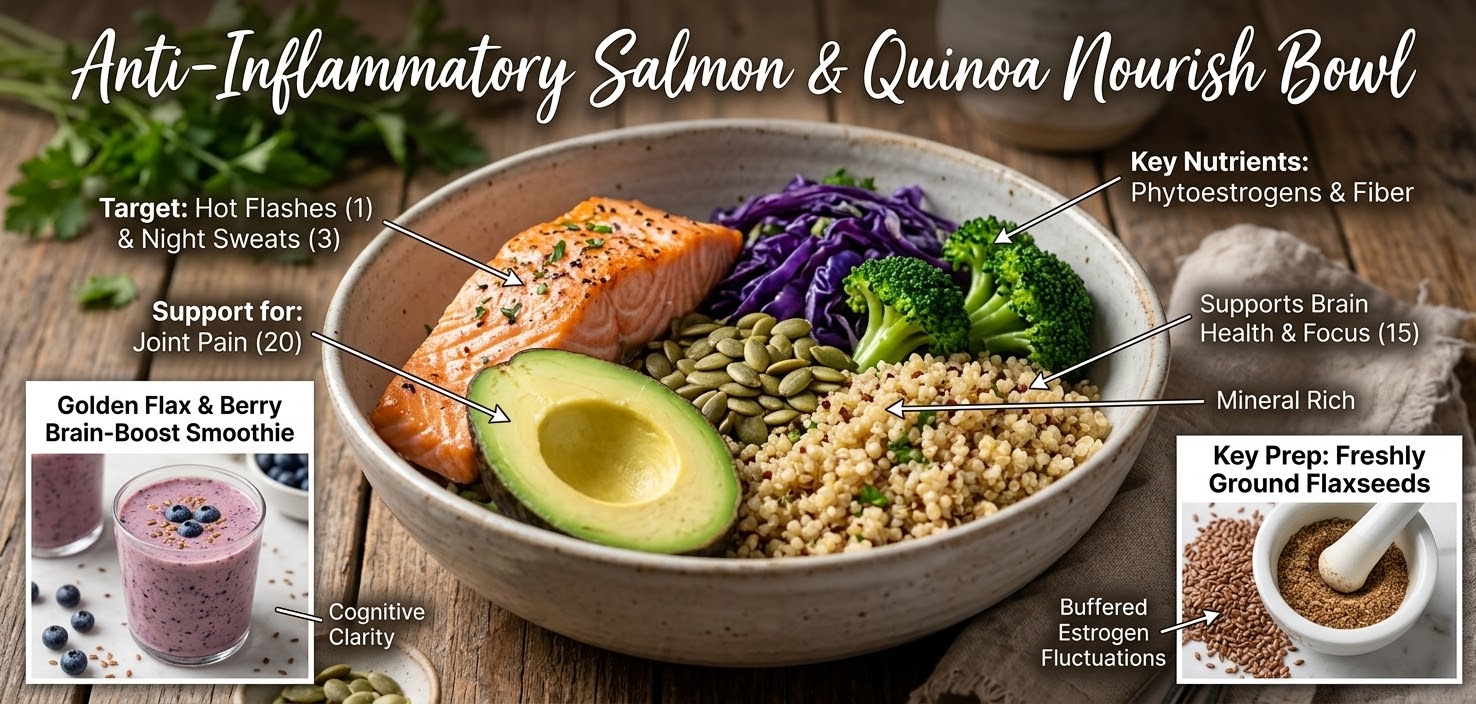
 Hormonal transitions during perimenopause and menopause bring profound physiological shifts. From vasomotor symptoms like hot flashes and night sweats to cognitive changes, fatigue, and joint stiffness, the body requires targeted nutritional and lifestyle support to maintain equilibrium.While no single food can replace comprehensive healthcare, a diet rich in phytoestrogens, omega-3 fatty acids, and essential minerals can significantly ease daily discomfort.The Nutritional Pillars of Menopausal HealthPhytoestrogens: Plant compounds found in ground flaxseed, sesame seeds, and fermented soy (tempeh, edamame) gently interact with estrogen receptors, helping to buffer fluctuations.Anti-Inflammatory HealthyFats: Omega-3s from wild fatty fish, chia seeds, and walnuts help support brain function, heart health, and joint lubrication.Bone-Building Minerals: Calcium, magnesium, and vitamin D are essential to preserve bone density and support nervous system calm.Fiber: Soluble and insoluble fiber support estrogen clearance through the gut, steadying blood sugar and reducing bloating.2 Restorative, Hormone-Supportive Recipes1. Golden Flax & Berry Brain-Boost Smoothie Ideal for morning energy, gut mobility, and vasomotor support.1 cup unsweetened almond milk or soy milk2 tbsp freshly ground flaxseeds1/2 cup frozen wild blueberries (rich in polyphenols for cognitive clarity)1 handful fresh baby spinach (folate and magnesium)1/2 tsp ground turmeric + a pinch of black pepper (anti-inflammatory)1 scoop clean plant-based protein powderInstructions: Blend all ingredients on high until completely smooth. Drink immediately to maximize nutrient absorption.2. Anti-Inflammatory Salmon & Quinoa Nourish Bowl A dinner designed to stabilize evening blood sugar, reduce joint stiffness, and promote restorative sleep.4–5 oz wild-caught salmon fillet (baked with olive oil and lemon)1/2 cup cooked warm quinoa1 cup steamed broccoli florets and shredded purple cabbage1/4 medium avocado, sliced1 tbsp pumpkin seeds (rich in zinc and tryptophan)Dressing: 1 tbsp extra-virgin olive oil, 1 tsp apple cider vinegar, 1/2 tsp Dijon mustardInstructions: Layer the quinoa as a base, arrange the vegetables and baked salmon on top, sprinkle with pumpkin seeds, and drizzle with the dressing.Everyday Strategies to Alleviate SymptomsOptimize Sleep Hygiene: Keep the bedroom cool (around 65°F / 18°C), use breathable cotton or bamboo bedding, and reduce screen exposure one hour before bed.Limit Vasomotor Triggers: Caffeine, alcohol, high-sodium foods, and refined sugars frequently trigger hot flashes and heart palpitations.Incorporate Resistance Training: Strength-building exercises twice a week help counteract metabolic slowdown and preserve bone mass.Disclaimer: This article is for informational purposes only and should not replace personalized medical advice. If you are experiencing severe symptoms such as heart palpitations, severe mood disturbances, or unmanaged pain, consult a board-certified gynecologist or endocrinologist to discuss evidence-based therapies, including Hormone Replacement Therapy (HRT).
Navigating Perimenopause: Nourishing Recipes and Daily Habits for Hormonal Balance