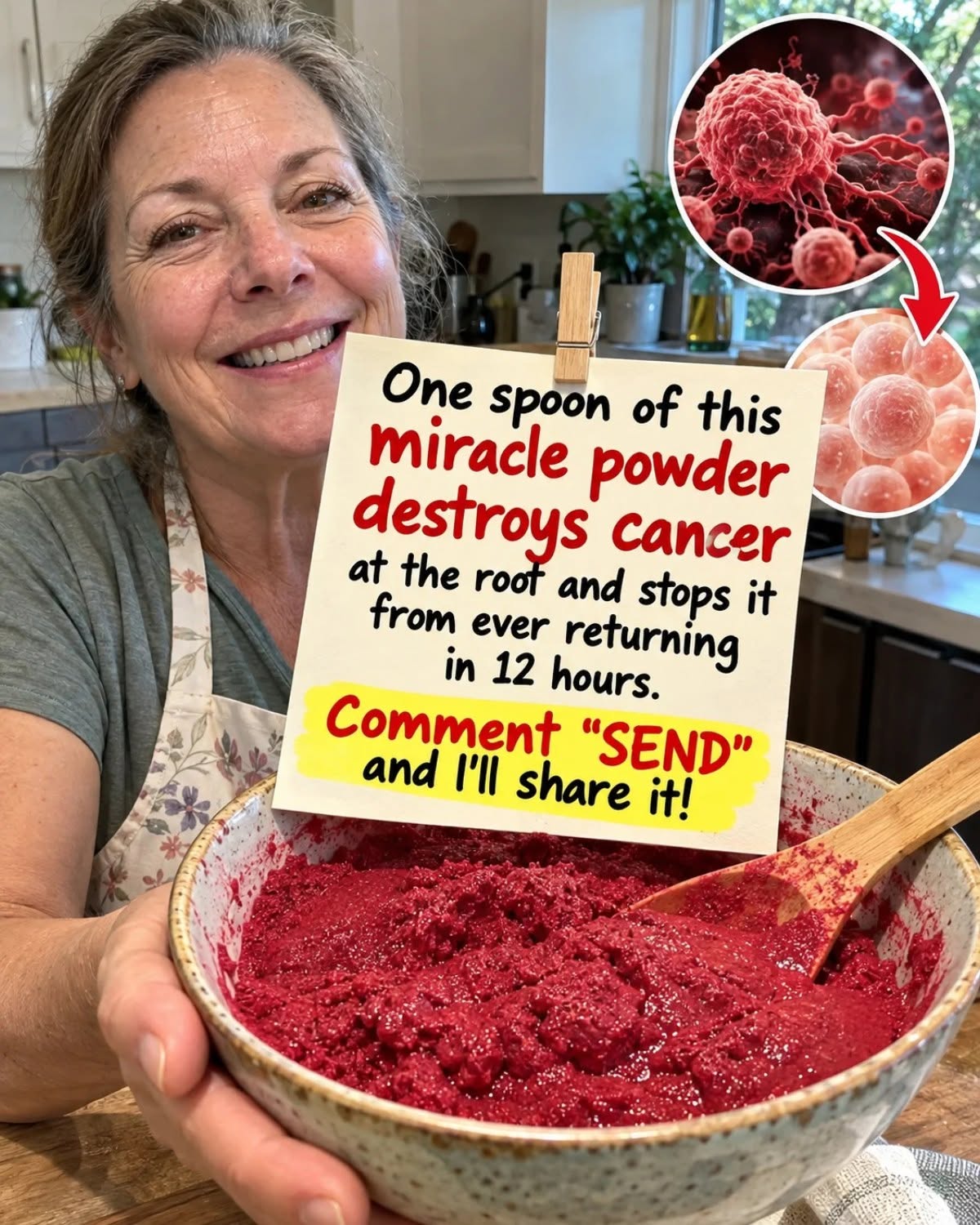
Turmeric is the bright orange powder in that post, and the claim is blunt: it targets cancer at the root and helps block recurrence. That kind of promise hits like a hammer because it speaks directly to the ugliest fear — the scan, the biopsy, the follow-up, the word nobody wants to hear twice.
But the real story is not a fairy tale about a spice “destroying” anything overnight. It is about turmeric’s compounds pressing on the internal machinery cancer depends on: inflammation, oxidative stress, broken repair signals, and the dirty static that lets damaged cells keep slipping through the cracks.
By the time most people start looking for answers, the body already feels like it is fighting itself. The fatigue is heavier. The joints feel rusted. The whole system seems to hum with pressure, as if every cell is working inside a smoke-filled room.

What the health industry rarely says out loud is this: the body has a blueprint for cleanup, but that blueprint gets starved when the terrain is overloaded. Turmeric acts like a switch that forces that terrain to change.
The Cellular Firebreak That Changes the Battlefield
Think of your body like a warehouse packed wall to wall with boxes, alarms, sprinklers, and emergency exits. When the system works, one bad spark gets contained. When it fails, the whole place turns into a furnace.
Turmeric behaves like a fire-smothering compound in that overheated environment. It doesn’t stroll in wearing a cape; it drives a wedge into the conditions that let damaged cells multiply, spread, and keep the body locked in a state of alarm.

The first thing people notice is not some cartoon miracle. It is the way the body stops feeling so heavy and inflamed, like a pressure valve finally opened somewhere deep inside.
Without that support, the body is like a kitchen vent caked with grease. Every new spark sticks, every bit of heat lingers, and the air stays burnt long after the flame should have been cleared.
The supplement machine loves vague promises. The produce aisle does not have a marketing budget, which is exactly why a cheap spice gets ignored while expensive bottles get all the noise.

That is not because turmeric is weak. It is because a pantry staple cannot be turned into a luxury empire as easily as a capsule with a shiny label.
And once the terrain shifts, the body often feels less like a battlefield and more like a system that can finally breathe.
Why the Cells Stop Getting Away With It
Cancer thrives when damaged cells hide from cleanup. Turmeric works like a molecular broom and a signal jammer at the same time, forcing the body to notice what should not be there and making it harder for chaos to keep spreading in the dark.

Picture a warehouse where broken boxes keep getting relabeled and shoved back onto the shelves. That is what a failing internal cleanup system looks like. Turmeric pushes back against that mess and tells the body to stop treating trash like inventory.
After a few days of consistency, the shift shows up in how the body handles strain. The heavy, inflamed, “everything feels stuck” sensation starts to loosen, and the internal war zone feels less hostile.
That matters because cancer does not grow in a vacuum. It feeds on a landscape that has been softened, exhausted, and chemically noisy. Change the landscape, and you make the ground far less welcoming.
What looks like a simple kitchen spice is really a terrain-changer: it floods the body with rust-stripping compounds that help damaged cells stand out instead of hiding in plain sight.
That is the ugly truth the profit machine hates. There is no patent hiding inside a root in the spice drawer, and Wall Street does not build empires around something you can buy for a few dollars at the grocery store.
So the story gets dressed up, diluted, and sold back in expensive forms. But the raw reality stays the same: the body already knows how to defend itself when it gets the right cellular ammunition.
Why the Fear Starts to Lose Its Grip
For anyone living with recurrence anxiety, the emotional shift is just as real as the physical one. Breakfast stops being background noise and becomes a decision point — a small daily act that either feeds the fire or helps smother it.
That is why turmeric grabs people by the throat. It does not demand a ritual. It asks for repetition, and repetition is where quiet wins begin.
Over time, the body often feels less fragile. The joints do not bark as loudly. Energy does not collapse as fast. The whole system feels less like a frayed wire and more like a circuit that can finally carry current again.
And here is the part that changes the mood in the mirror: when internal inflammation cools, the face can look less drained, the skin can look less angry, and the body can seem less swollen with strain.
That is not cosmetic fluff. It is a sign that the forgotten second brain in your belly and the rest of the system are no longer drowning in their own waste signals.
The cheapest fix usually gets the least airtime. That is why so many people spend a fortune chasing complexity while a single spice keeps sitting in plain sight.
Turmeric does not promise magic. It changes the conditions that let trouble spread, and that is far more dangerous to the fear merchants than any flashy slogan.
The One Thing That Can Sabotage the Whole Effect
Most people dump turmeric into food and call it finished, then wonder why nothing feels different. Used carelessly, it can pass through like a bright-colored passenger with no seatbelt on.
The real difference comes from pairing it the right way so the body can actually absorb and use it instead of letting it slip away. Treat it like garnish, and you blunt the entire effect before it ever reaches the bloodstream.
That tiny detail is where the next layer gets interesting, because one companion ingredient changes the whole game.
This article is for informational purposes only and does not replace professional medical advice. Please consult your healthcare provider for personalized guidance.